

Eastern Subterranean Termite

Pest Busterzz Home Icon

Pest Library

Eastern Subterranean Termite Control in South Florida
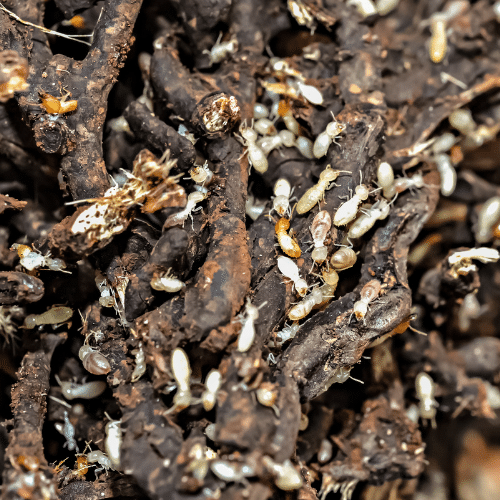
Eastern Subterranean Termite Quick Facts

Size

Workers are about 1/8 inch long; winged swarmers are approximately 3/8 inch including their wings

Color

Workers are creamy white, soldiers have darker brown heads, and swarmers are dark brown to nearly black

How to Identify

Look for pencil-width mud tubes, discarded equal-length wings, and wood that sounds hollow or appears blistered

Active Season

Active year-round in South Florida, with swarming often increasing during warm, humid spring weather after rain

Indoor or Outdoor

Colonies live in soil outdoors but may forage into homes and businesses through foundations, joints, and utility openings

Day or Night

Workers usually remain hidden in soil, wood, or mud tubes; winged swarmers often emerge during the day after warm rain.

Diet

They feed on cellulose found in wood, paper, cardboard, and other plant-based materials.

About Eastern Subterranean Termites

Eastern Subterranean Termites (Reticulitermes flavipes) are social, wood-feeding insects that build colonies in the soil. They are commonly recognized by protective mud tubes, discarded wings after a swarm, and concealed damage within wood.

South Florida’s warm climate and frequent moisture can support activity throughout the year. Because workers typically remain hidden inside soil, tubes, or structural wood, an infestation may develop without obvious surface activity. The main concern is gradual damage to wood and other cellulose-based building materials.

Where Are Eastern Subterranean Termites Commonly Found?

Underground Colony Sites

Eastern Subterranean Termites establish colonies in soil where moisture remains relatively stable. Common locations include:

  • Soil beneath and around foundations
  • Mulch beds and landscaped areas near buildings
  • Soil beneath patios, sidewalks, and concrete slabs
  • Areas around buried wood, roots, or landscape timbers
  • Tree stumps and wood debris in contact with soil
  • Crawl spaces and foundation voids with persistent moisture
  • Locations near plumbing leaks, poor drainage, or irrigation runoff
  • Protected soil near expansion joints and utility penetrations

Workers travel from the colony to above-ground food through sheltered routes that help them retain moisture.

Structural Foraging Areas

When termites reach a structure, they usually remain concealed inside wood, wall systems, or protected tubes. Common areas include:

  • Wall framing and sill plates
  • Wood around windows and door frames
  • Floor systems, subfloors, and baseboards
  • Areas around plumbing and utility penetrations
  • Wood behind siding or exterior finishes
  • Crawl-space supports and foundation-adjacent lumber
  • Wood softened by leaks, decay, or prolonged moisture
  • Kitchens, bathrooms, laundry areas, and other moisture-prone rooms

Mud tubes may appear on concrete, masonry, piers, or foundation walls where termites bridge the gap between soil and wood.

South Florida Conditions That Support Activity

South Florida’s warmth, humidity, rainfall, and irrigated landscaping can maintain the moisture subterranean termites need. Risk may increase when a property has:

  • Wooden building materials touching the soil
  • Mulch or soil piled against siding or stucco
  • Moisture-damaged framing, trim, or subflooring
  • Interior walls when hidden routes extend upward or water collecting near the foundation
  • Plumbing, irrigation, roof, or air-conditioning leaks
  • Tree stumps and wood debris in contact with soil stored against the structure
  • Tree stumps, roots, or buried wood near the foundation
  • Cracks, expansion joints, or gaps connecting soil to the building
  • Limited access for routine inspection around the foundation

Eastern Subterranean Termite Behavior

Feeding and Foraging

Worker termites search continuously for cellulose-containing materials, including:

  • Structural lumber and wood framing
  • Subflooring, trim, and wood-based finishes
  • Paper products and cardboard
  • Tree roots, stumps, and buried wood
  • Other plant-based materials containing cellulose

Workers digest cellulose with the help of microorganisms in their digestive system and share food with other colony members.

Colony Organization

Colonies include workers, soldiers, and reproductive termites. Workers gather food and maintain the nest, soldiers defend the colony, and winged reproductives leave mature colonies to form new ones.

The primary colony usually remains in the soil. Workers may forage through underground tunnels and mud tubes for considerable distances, allowing more than one area of a structure to show activity.

Mud Tubes and Hidden Movement

Because subterranean termites lose moisture easily, they build earthen tubes over exposed surfaces. These tubes may be found along:

  • Foundation walls
  • Concrete slabs and expansion joints
  • Crawl-space piers and supports
  • Utility and plumbing penetrations
  • Cracks where soil access meets structural wood
  • Interior walls when hidden routes extend upward
  • Garages, patios, and attached additions
  • Other protected pathways between the soil and a food source

Breaking a tube may reveal pale workers or soldiers, but the absence of visible termites does not confirm that the colony is inactive.

Swarming and Seasonal Activity

Colonies can forage throughout the year in South Florida. Winged reproductives are most noticeable during swarms, which commonly occur during warm, humid conditions after rainfall.

Swarmers are attracted to light and may collect near windows, doors, porches, and indoor light fixtures. Their appearance often indicates that a mature colony is nearby.

Damage and Property Concerns

Structural Wood Damage

Eastern Subterranean Termites can feed within structural wood for extended periods while leaving the outer surface relatively intact. Over time, this concealed feeding may weaken framing, flooring, trim, and other cellulose-based components.

Possible signs of activity include:

  • Mud tubes on foundations, slabs, or walls
  • Discarded wings near doors and windows
  • Wood that sounds hollow when tapped
  • Blistered, darkened, or unusually soft wood surfaces
  • Doors or windows that begin fitting poorly
  • Visible galleries containing soil-like material

The amount of damage cannot be determined from a single sign alone. A professional inspection helps distinguish active termite activity from old evidence and other wood-destroying insects.

Health and Safety Considerations

Eastern Subterranean Termites do not bite or sting people and are not considered a disease-transmission concern. Their importance is primarily related to property damage and the repairs that may be required when an infestation remains hidden.

Business and Property Management Concerns

For businesses, associations, and managed properties, termite activity may complicate maintenance schedules, tenant communication, inspections, and repair planning. Prompt identification helps property managers make informed decisions based on the location and extent of activity.

Because damage patterns can resemble moisture deterioration or other insect activity, confirmation by a trained professional is important before selecting a treatment or repair strategy.

When Are Eastern Subterranean Termites Active in South Florida?

South Florida’s mild winters and warm soil allow Eastern Subterranean Termites to remain active throughout the year. Visible activity is not limited to a single season.

Activity or visibility may increase during:

  • Warm spring weather and rising soil temperatures
  • Humid conditions and periods of regular rainfall
  • Days following warm rain, when swarmers may emerge
  • Periods when irrigation or drainage keeps soil consistently moist
  • Storms or flooding that alter normal underground foraging routes
  • Construction, landscaping, or soil disturbance near an established colony
  • New wood-to-soil contact created by repairs or landscape changes

Rain and soil moisture influence foraging and swarming. Warm, humid weather after rainfall may trigger reproductive termites to leave a mature colony, while workers continue feeding out of sight.

During cooler or drier periods, visible signs may decrease even though the underground colony remains active. Indoor feeding can continue wherever termites retain access to moisture and cellulose.

Why DIY Eastern Subterranean Termite Control May Fall Short

DIY efforts may address a visible tube or small area without reaching the underground colony or every active entry point. Professional inspection becomes the more practical next step when mud tubes return, swarmers appear indoors, damage is suspected, or the insect cannot be confidently identified.
  • Treating Only Visible Evidence | Removing a mud tube or treating exposed termites does not necessarily reach the underground colony. Workers may rebuild the tube or use another concealed route.
  • Misidentifying the Termite | Subterranean termites, drywood termites, carpenter ants, and other wood-destroying insects require different management strategies. Incorrect identification can delay an effective response.
  • Missing Hidden Entry Points | Termites may enter through expansion joints, foundation cracks, plumbing penetrations, or areas concealed behind finishes. Treating one location may leave other routes active.
  • Failing to Reach the Soil Colony | The colony may be located underground and away from the visible damage. Surface applications alone may not affect the broader termite population.
  • Ignoring Moisture and Wood-to-Soil Contact | Poor drainage, leaks, buried wood, and structural lumber touching soil can continue supporting termite access and activity.
  • Overlooking Follow-Up | Termite management may require monitoring to evaluate results and identify newly active areas. A lack of visible termites immediately after treatment does not always confirm that activity has ended.
Eastern Subterranean Termite treatment in South Florida

Lower-Impact Options

When appropriate, Pest Busterzz may use monitoring, precisely placed baiting or localized treatment, moisture recommendations, and targeted exterior management to reduce unnecessary product use.

The Pest Busterzz Eastern Subterranean Termite Treatment Approach

Pest Busterzz begins with a property-specific inspection and develops recommendations based on the termite species, construction, activity level, and conditions found.

01

Inspection

We confirm the termite species, look for mud tubes and damaged wood, evaluate moisture conditions, and inspect foundations, slabs, crawl spaces, utility penetrations, and other possible entry areas.

02

Targeted Treatment

Based on the inspection, the plan may include termite baiting, localized treatment, soil or exterior management, and attention to active entry points. The appropriate approach depends on the structure and evidence found.

03

Monitoring & Follow-Up

We check activity, evaluate results, and adjust the plan when necessary. Follow-up timing depends on the treatment selected, construction, and conditions at the property.

04

Prevention

Recommendations may include correcting drainage and leaks, reducing wood-to-soil contact, moving cellulose debris away from the foundation, maintaining inspection access, and addressing structural gaps.

Yes. Eastern Subterranean Termites occur in Florida, and South Florida’s warm soil and frequent moisture can support year-round colony activity. Swarming may become more noticeable during warm, humid weather after rainfall.

Look for mud tubes on foundations or walls, discarded equal-length wings after a swarm, and wood that sounds hollow or appears blistered. Workers are pale and usually remain hidden, so professional identification may be needed.

Subterranean termites maintain contact with soil and commonly build mud tubes. Drywood termites live entirely inside wood and often leave small, pellet-like droppings. Treatment options differ, making accurate identification important.

Winged reproductive termites are attracted to light and often gather near windows and doors after emerging from a mature colony. Indoor swarmers may indicate that termites are active within or immediately beside the structure.

Not necessarily. A mud tube confirms a protected travel route, but it does not reveal the full extent or age of the activity. An inspection is needed to evaluate whether termites are active and where damage may be present.

They are not known for biting or stinging people or pets. The primary concern is their ability to feed on structural wood and other cellulose-based materials.

No. Removing a tube only removes visible evidence. The underground colony and concealed foraging routes may remain active, and workers can rebuild the tube or create another path.

Baiting may be appropriate for some properties, but the decision depends on the structure, activity, and inspection findings. Placement, monitoring, and follow-up are important parts of a bait-based plan.

Recurring evidence may involve a new colony, an untreated entry route, changing soil conditions, or continued access to moisture and cellulose. Follow-up helps determine whether the original activity persists or a new area has developed.

Schedule an inspection when you find mud tubes, discarded wings, swarmers indoors, hollow-sounding wood, unexplained wood damage, or recurring evidence near the foundation. Early identification can clarify the appropriate next step.

Pest Busterzz Home Icon

faqs

Eastern Subterranean Termite FAQs

Schedule an Eastern Subterranean Termite Inspection

If you have noticed mud tubes, discarded wings, swarmers, or unexplained wood damage at your South Florida home or business, Pest Busterzz can provide proper identification and recommendations based on the inspection findings. The plan may also include practical steps for reducing moisture, wood-to-soil contact, and other conditions that can allow activity to return.