
Fruit Flies in Kitchen? Find the Source Before Thanksgiving
Fruit flies in kitchen? They’re breeding somewhere wet and fermenting close by: soft fruit, a potato or onion bin, the sink drain, the trash can or a sour sponge. Find that spot, clean it out, and use a vinegar trap to watch the numbers drop. A trap by itself only catches the adults.
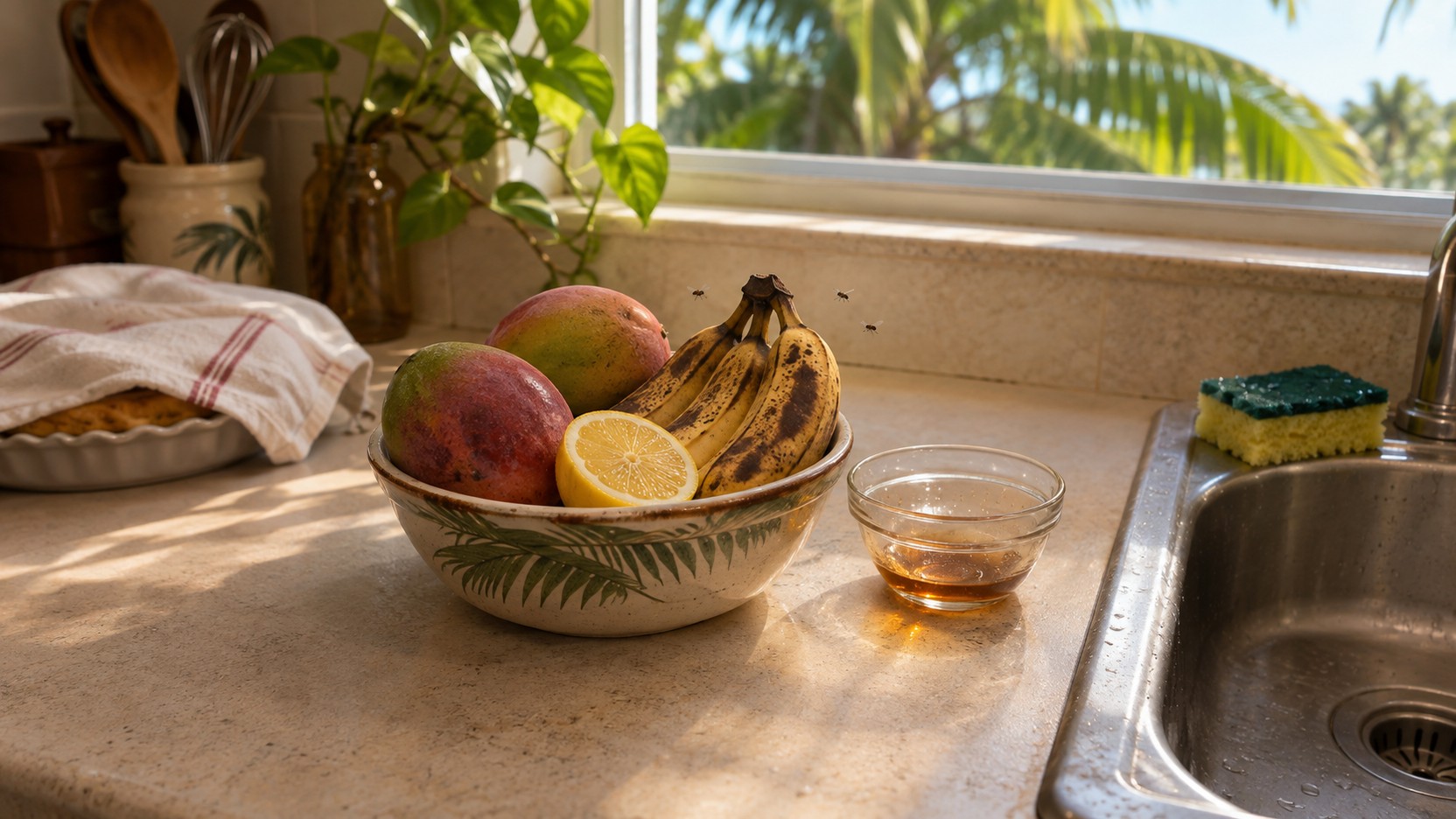
Thanksgiving is next Thursday, and in South Florida the kitchen is already working overtime. Bananas, mangoes and plantains ripen fast on a warm counter, the recycling fills with bottles, and the screen door stays open for the breeze. Give yourself a few days now to find the source, so the pies and the fruit platter aren’t sharing the counter with a cloud of tiny flies.
Why fruit flies show up in your kitchen
Fruit flies feed and lay eggs on fermenting food and the yeast that grows on it. University of Maryland Extension says the female lays her eggs right on the surface of the food or fermenting liquid, and the whole life cycle takes 8 to 10 days. That’s why two or three flies on Monday can turn into a crowd by the weekend if the source stays put.
The usual sources in a home kitchen, according to Texas A&M AgriLife Extension and Iowa State University Extension:
- Overripe or damaged fruit left out, especially bananas, plus tomatoes and cut fruit.
- Potatoes or onions going soft in a dark bin or bag.
- Juice, soda, wine and beer residue in cans, bottles and the recycling bin.
- The wet bottom of a trash can, where a liner leaked.
- Slime film inside a slow or seldom-used drain and the garbage disposal.
- Damp mops, sponges and dish rags.
- Spills and crumbs under the fridge, the stove and the dishwasher edge.
- A compost bucket on the counter.
Why South Florida kitchens get them in November
Our fall isn’t much of a fall. The kitchen stays warm, the humidity hangs around, and November is when a lot of us finally open the windows. Fruit flies are small enough to slip through window screens, according to Texas A&M, and they also ride in on produce from the store or the farmers market. Add holiday cooking, a counter full of fruit and a recycling bin full of bottles, and they have everything they need.
Fruit flies, drain flies or fungus gnats? Make sure you know which
Treat the wrong fly and you’ll clean all day for nothing. Here’s the quick ID:
- Fruit flies: tiny, tan to brownish, usually with bright red eyes. They hover around fruit, the trash and the sink, and they land on the rim of your wine glass.
- Drain flies: fuzzy, gray and shaped like tiny moths. They sit on the wall or the tub near a drain and fly only a short hop. Our post on the drain fly life cycle covers them in detail.
- Fungus gnats: thin, dark and mosquito-like with long legs. They hang around damp houseplant soil and windows, not the fruit bowl. If little flies rise when you move the basil pot on the windowsill, check the soil.
- Phorid flies: about fruit fly size but humpbacked, and they tend to run across a surface instead of flying off. Texas A&M links them to things like broken garbage disposals and leaking sewer lines. If you see these, call a pro or a plumber.
How to get rid of fruit flies in kitchen spaces: 9 steps
- Walk the kitchen with a flashlight. Check every place food sits: the fruit bowl, the bread box, the pantry floor, the potato and onion bin, the bottom of the fridge, the top of the cabinets and the space behind the toaster.
- Toss anything soft, leaking or fermenting. One mushy potato at the bottom of a bag, or a split guava under the rest of the fruit, can keep the whole cycle going. Get to the bottom of every bag and bowl, bag the leakers and take them straight to the outside bin. Wash and dry the bowl, the bin and any shelf the juice reached.
- Refrigerate ripe produce. Bananas can stay out if you eat them fast. Anything ripe that will sit, put it in the fridge or a sealed container.
- Rinse the recycling. Every can and bottle gets a quick rinse and a shake before it goes in the bin. Wine and beer bottles first.
- Wash the trash can and compost bucket. Look under the lid lip where the liner folds over. A smear of fruit pulp can sit there through several bag changes. Take the bag out, wash the bottom, the rim and the underside of the lid with hot soapy water, and let it dry before a new bag goes in. Empty the countertop compost bucket and wash it, the lid and the groove where the lid fits.
- Scrub the sink drain and disposal. Pull the strainer and scrub both sides, then scrub inside the drain with a stiff brush and clean the overflow hole. Before you touch the disposal, unplug it or switch off its power at the breaker, and keep your hands out of the opening. Brush the underside of the rubber splash guard and the upper rim you can reach. Iowa State Extension notes you can also pour boiling water slowly along the sides of the pipe. Skip the bleach. The same source says it has no benefit in drains, because it rushes past the film where the larvae live.
- Swap the sponge and wash the rags. Throw out the old sponge, run dish towels and mop heads through the wash, and hang mops off the floor to dry.
- Wipe under and around appliances. Move the toaster and the microwave cart. Leave the fridge and stove in place and shine a flashlight under their front edges; a juice streak on a cabinet face often leads to a sticky patch on the floor. A damp cloth on a flat cleaning tool reaches under the front lip. Check the drip tray under the fridge if yours has one you can reach.
- Set a monitor trap and watch it. Put a little apple cider vinegar in a small jar or dish, add a drop of dish soap and cover it with plastic wrap poked with a few small holes. Set it near where you see the most flies, off the surface where you chop or serve food. Check it at the same time each day and reset it in the same spot. If the catch keeps dropping, you found the source. If it doesn’t, something is still breeding near where the flies gather.
Fruit fly checklist before Thanksgiving
Print this or keep it on your phone:
- Fruit bowl checked; soft or bruised fruit tossed
- Potato and onion bin emptied and checked to the bottom
- Ripe produce moved to the fridge or sealed containers
- Recycling rinsed; bin washed
- Trash can bottom, lid rim and lid underside washed and dried; compost bucket washed
- Sink strainer, drain, disposal splash guard and overflow scrubbed (disposal power off first)
- Sponge replaced; dish towels and mop heads washed and dried
- Spills cleaned under the fridge, stove and dishwasher edge
- Vinegar trap set and checked each morning
- Houseplants checked if the flies look more like gnats
Thanksgiving week habits that help keep them away
- Buy fruit and vegetables closer to the day instead of stocking up early.
- Keep pies, the fruit platter and the bread covered, and keep the Key lime pie in the fridge until dessert.
- Take out the kitchen trash every night while you’re cooking.
- Give whoever clears the drinks one extra job: rinse wine and beer bottles, soda cans and juice bottles before they hit the recycling.
- After guests leave, lift the platters, the fruit bowl and the drink tray and wipe the counter underneath, that night instead of the next morning.
- Keep the screen door closed while the food is out.
Source cleanup vs traps vs sprays
- Source cleanup: this is the fix. Fruit fly larvae live in the wet, fermenting stuff, so once it’s gone, the next batch has nowhere to grow.
- Vinegar traps: a good monitor and a help with the adults already flying. They don’t touch the eggs and larvae, so a trap with no cleanup just keeps catching the next batch.
- Sprays and bug bombs: skip them. Texas A&M says traps and sprays give only temporary relief without removing the breeding site, and you don’t want insecticide drifting over food and counters before a holiday meal.
What not to do
- Don’t spray insecticide around food, counters or dishes.
- Don’t set off a bug bomb in the kitchen.
- Don’t count on bleach poured down the drain.
- Don’t leave a full trap out for weeks. Empty and refill it so you can read it.
- Don’t bury the problem with air freshener or a candle. The flies are telling you where the source is.
When fruit flies in kitchen spaces need a pest pro
Start with the cleanout above. Call a pro when:
- The flies keep coming back after you’ve cleaned every source on the checklist.
- The flies come from one drain, a floor crack or a cabinet base, even after scrubbing. Note the exact opening so the pro or plumber can start there.
- They look humpbacked and run across the counter. That can point to a broken drain line or buildup you can’t reach.
- You’re seeing small flies in more than one room, like a bathroom or the laundry.
- Other pests are showing up too, like roaches or ants around the same spots.
If you’re already on a Pest Busterzz service plan and pests come back between scheduled visits, re-treatment is free.
Fruit flies in kitchen FAQs
Why do I suddenly have fruit flies in my kitchen?
They came in on produce or through a screen and found something fermenting. Check soft fruit, the potato or onion bin, the trash can bottom, the recycling and the sink drain. Wherever it’s wet and sour, that’s where they’re breeding.
Do vinegar traps get rid of fruit flies?
Traps catch adults, not the eggs and larvae in the source. Use a trap to tell you whether your cleanup worked. If the catch keeps dropping, you found it. If it doesn’t, keep looking.
Can fruit flies live in my sink drain?
Yes. Fruit flies can breed in the slime film inside a slow or seldom-used drain and in the garbage disposal. Scrub the inside with a stiff brush and clean the overflow. Bleach doesn’t help much because it rushes past the film.
How do I tell fruit flies from drain flies?
Fruit flies are tan, often with red eyes, and hover around food. Drain flies are fuzzy, gray and moth-shaped, and they rest on walls near drains. Different flies, different sources, so check which one you have first.
When should I call a pest pro for fruit flies?
Call if the flies keep coming after you’ve cleaned every source, if they come from a drain or floor crack, if they look humpbacked, or if you see them in more than one room. A pro can check the spots you can’t reach.
Get your kitchen ready for the holidays
Cleaned it all and still seeing flies? Pest Busterzz serves homes across Miami-Dade, Broward and Palm Beach counties. Book an inspection and we’ll track down where they’re coming from. For more prep, see our Thanksgiving flour check, kitchen pest control tips and guest room pest check.