
Hotel Pest Management: A Practical IPM Guide for Staff and Managers
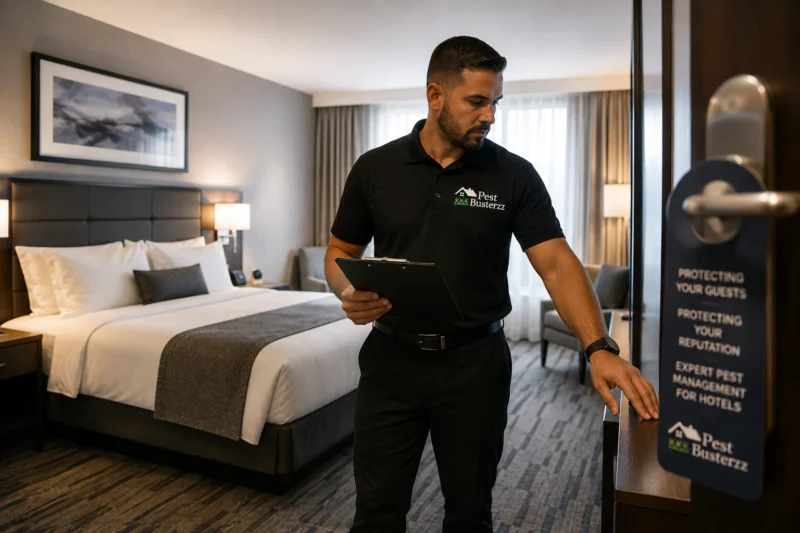
Hotel pest management is a property-operations issue, not a task that belongs to one department. Housekeeping may notice a sign first. Maintenance may know about a leak or gap. A manager may need to coordinate access, documentation, and a service provider. When those observations stay separated, a small concern can become harder to understand.
A practical hotel program starts with the same ideas used in integrated pest management: monitor what is actually happening, correct conditions that support activity, set a clear response process, and choose control steps that fit the property and the concern.
Give staff one clear reporting process
Staff should know who receives a pest report and what information to record. A useful report includes the date, approximate time, room or work area, exact location, what was observed, and whether the concern is still present. A photograph can help when it is safe and permitted, but a report should describe evidence without guessing the pest’s identity.
Keep guest and employee privacy out of the working log unless a detail is necessary to address the property condition. Use a room number, floor, department, or service area rather than names. A consistent record helps management see whether a concern is isolated, repeated, connected to a building condition, or occurring in more than one area.
Review the conditions around the property
Pests look for the basics: food, water, shelter, and a way inside. In a hotel, those conditions can appear in different places:
- Guest rooms, closets, corridors, and housekeeping carts.
- Kitchens, pantries, bars, breakfast areas, and food-storage rooms.
- Trash rooms, loading docks, compactor areas, and delivery paths.
- Laundry, mechanical rooms, pipe chases, and other warm or damp spaces.
- Exterior doors, landscaping, drains, roof penetrations, and wall openings.
The goal is not to assume that every location has activity. It is to give staff a repeatable way to notice conditions that deserve correction. Leaks, condensation, open food, overflowing waste, clutter, damaged seals, and gaps around utilities should be routed to the person who can address them.
Make housekeeping and maintenance part of the plan
Housekeeping teams can flag evidence while cleaning or servicing rooms, but they should not be expected to diagnose a pest from a bite, mark, or quick sighting. Maintenance teams can help by reporting moisture, damaged screens, gaps, door problems, and conditions behind or under equipment that are difficult to reach during routine room service.
Management should define how a report is escalated, who can approve access, and how a room or work area is handled while the concern is reviewed. The correct action depends on the evidence, the property’s policy, the service agreement, and any applicable local requirements.
Give bed bug reports their own response path
Bed bug concerns deserve a documented process because belongings, rooms, and neighboring areas may be involved. A report of a bite alone does not confirm bed bugs. If staff find physical evidence or a suspected insect, preserve the information, notify the designated manager, and follow the hotel’s plan for provider review.
Do not move furniture, luggage, linens, or personal belongings from one room to another simply to make the room available. Ask the property’s pest professional or manager what should be contained, what access is needed, and how the concern will be recorded. Pest Busterzz’s bed bug information page and bed bug treatments page provide routes for discussing the current service scope.
Coordinate with the pest professional
Before a visit, provide the property type, areas involved, operating hours, access restrictions, recent construction or maintenance changes, and any service records that can be shared. Identify kitchens, food-storage areas, occupied rooms, shared spaces, exterior zones, and locations that require an escort.
Ask what the visit will cover, what preparation is needed, how inaccessible areas will be documented, and which recommendations belong to maintenance or housekeeping. A service conversation should also clarify what is included, what requires a separate decision, and how findings will be reported. Do not promise guests a treatment date, a particular product, formal clearance, or complete control unless those details are confirmed in the provider’s written scope.
Use the log to improve the property
Review reports for patterns instead of closing each one as a separate event. Repeated observations near a loading door may point to an access or waste issue. Activity near a food area may call for a sanitation or storage review. A recurring report after rain may justify a moisture and drainage check. These are questions for the facility team and provider to evaluate, not conclusions to write into a guest-facing record.
Keep the process respectful and practical. Staff need a way to report concerns without being blamed, guests need privacy, and managers need enough information to decide what should happen next.
South Florida commercial pest-management support
Pest Busterzz lists commercial pest-control services for South Florida businesses. If the concern involves rodents or cockroaches, the rodent-control and cockroach-control pages provide additional context. Use the contact page to describe the property and the evidence that needs review. Confirm current coverage, inspection scope, preparation, timing, and service terms for the specific hotel before making commitments to staff or guests.
Hotel pest-management checklist
- Name one person or team responsible for receiving reports.
- Record location, time, evidence, and follow-up without guessing the pest.
- Review food, waste, moisture, clutter, access points, and room turnover.
- Give housekeeping and maintenance a clear escalation path.
- Keep bed bug concerns on a documented response track.
- Share access limits and recent property changes with the provider.
- Review patterns and correct building conditions instead of relying on repeated reaction.
Frequently asked questions
Does a hotel need the same pest-control schedule as every other hotel?
No. The useful schedule depends on the property, operating conditions, history, access, monitoring information, and service scope. A provider should help define what fits the specific site.
Does one guest report prove there is an infestation?
No. A report is important information, but it should be documented and evaluated. Staff should avoid confirming a pest identity from a bite or a brief description alone.
Should a hotel spray a room immediately after a report?
Not automatically. The correct response depends on the evidence, the property’s plan, product labels, access, and provider guidance. A rushed application can make later inspection and documentation more difficult.