
What Does Rodent Exclusion Usually Include?
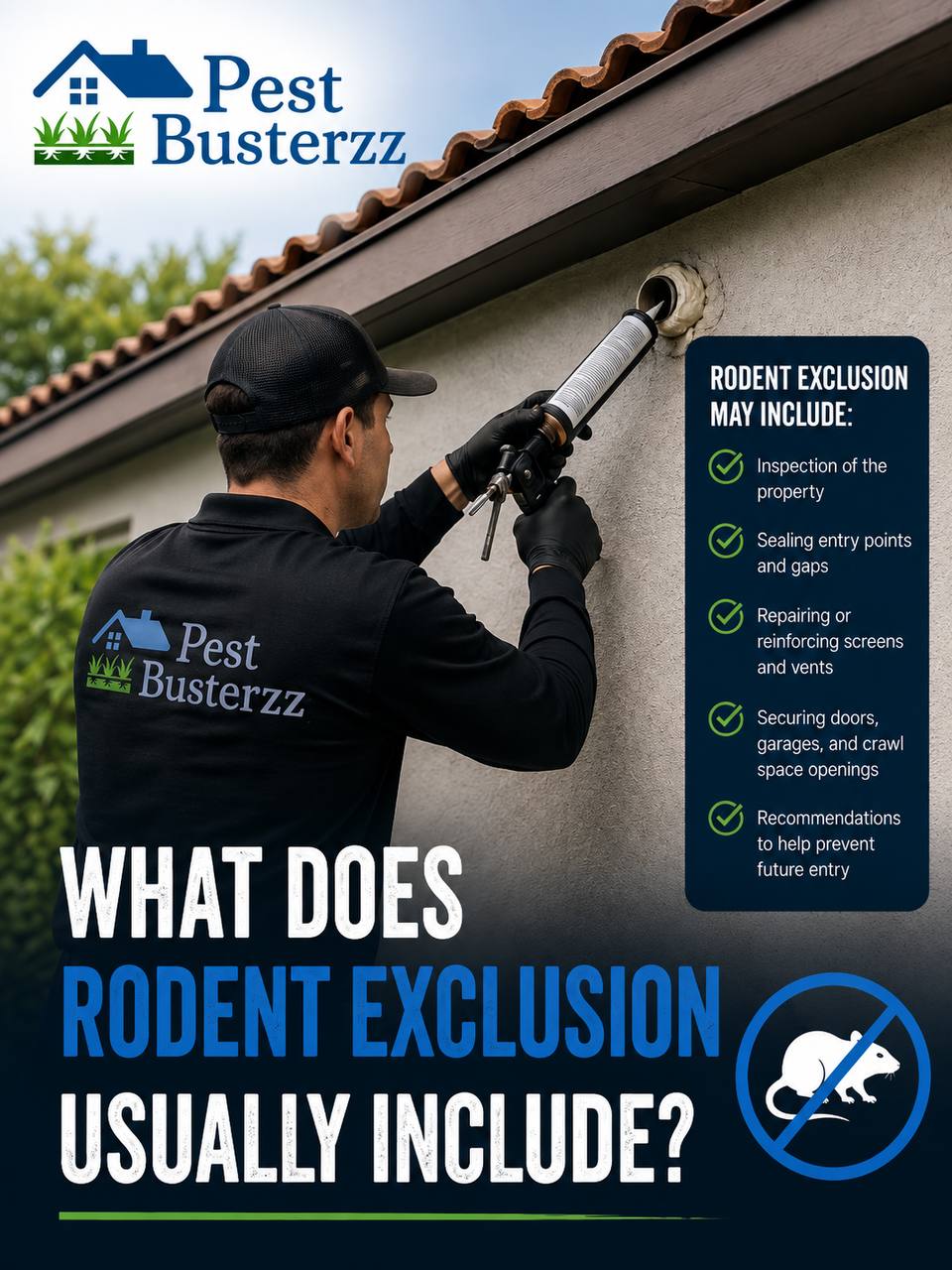
Rodent exclusion usually starts with a property inspection. The provider reviews the signs you noticed, looks for likely access points and conditions that may support activity, and then explains which exclusion work fits the agreed scope. Removal, monitoring, sanitation, and building repairs may also come up, but they are not automatically the same service.
Ask instead: What did you find, what will you address, and what still belongs to the property owner or another trade? That distinction matters in a South Florida home, condo, garage, attic, or small commercial space because the building and access conditions change the work.
Why the scope changes from one property to another
There is no single exclusion checklist that fits every building. A single-family home may require attention to a garage edge, attic access, roofline, vents, or openings around utilities. A condo or attached property may raise questions about shared walls, common areas, or access that is outside one resident’s control. A small business may need storage, receiving, food-waste, and service-door areas considered alongside the building envelope.
The reported evidence matters too. A sound in a wall, a dropping, a chewed package, a gap, or a photograph can justify an inspection, but one observation does not establish the species, the size of the activity, or the full route of entry. The EPA’s rodent prevention guidance treats signs, access points, and food, water, and shelter conditions as separate parts of the prevention picture.
What a rodent exclusion inspection may review
Start with the reported concern
Before looking at every possible opening, a provider may ask where and when the concern appeared. Note the room or exterior area, whether the sign has repeated, and whether anything changed before it was noticed. That timeline helps keep the inspection tied to a real property question instead of turning it into a generic list of gaps.
Check building transitions and likely access points
Depending on the property and what can be reached safely, the review may include:
- doors, garage edges, vents, and other exterior transitions;
- roofline or attic-access areas that are available for inspection;
- openings around pipes, wires, ducts, and other utilities;
- wall or floor penetrations near kitchens, storage, and utility areas;
- exterior openings near landscaping, waste, or stored materials; and
- interior locations where signs, nesting material, or movement have been reported.
The point is not to label every opening as the cause. A provider should explain which conditions appear relevant, which areas could not be checked, and whether a proposed fix is pest-service work or a building-maintenance issue.
Look for conditions that keep activity going
The inspection may also consider food, water, and shelter. In a home, that could mean the area beneath a sink, a garage storage zone, pet-food storage, or an exterior waste area. In a business, it could include a receiving door, storage aisle, break room, dumpster area, or plumbing space. These are inspection questions, not proof that a property is dirty or that a rodent is present.
What exclusion work may include
The final scope should follow the findings rather than a sales phrase. A provider may discuss several connected pieces of work.
Reducing a likely entry route
If an opening or damaged barrier appears relevant, exclusion may include sealing or correcting it within the agreed pest-service scope. Ask for the location, the proposed type of work, and the condition that made it worth addressing. Do not assume every crack, vent, or gap needs the same treatment.
Some openings involve roofing, plumbing, electrical, ventilation, masonry, or structural work. Those items may need the property owner, maintenance team, or another contractor. A clear proposal should say where the pest-service responsibility ends.
Separating access control from current activity
Closing a route can reduce future access, but it does not automatically explain how existing activity will be handled. Ask whether removal or management is part of the proposed scope, a separate recommendation, or a condition that must be evaluated first. The same applies to monitoring: ask what will be checked, how new signs should be reported, and what would cause the plan to change.
Pest Busterzz describes its rodent service around inspection, identifying entry points and nesting or signs, exclusion or prevention, and monitoring. The rodent-control service page can help you frame the conversation, but the property-specific work should still be confirmed before approval.
Keeping sanitation and repairs in the right lane
Sanitation, storage changes, and repairs can affect the outcome, but they are not all interchangeable with exclusion. If dry droppings, urine, nesting material, or a dead rodent are present, do not sweep or vacuum the material. Follow the CDC’s current cleanup guidance or ask what next step is appropriate for the situation. The article is not a substitute for detailed cleanup or protective-equipment instructions.
What may happen after the inspection
A useful service conversation should leave you with a decision path, even when the final answer is “more information is needed.” The next step may look like one of these:
1. A likely access point is identified. The provider explains the proposed exclusion work, what it covers, and what remains outside the scope.
2. Signs and access conditions need to be handled together. The provider explains how current activity, exclusion, and any monitoring or follow-up relate without promising a fixed number of visits.
3. The evidence is incomplete or the area is inaccessible. The provider records the limitation and tells you what information, access, or property-side repair would be needed before the scope can be finalized.
That kind of explanation is more useful than a promise to “seal everything.” It also gives a homeowner, property manager, or business operator something concrete to compare before approving service.
What to prepare before discussing exclusion
You do not need to dismantle the property or close openings before an inspection. Instead:
- write down where and when the concern was noticed;
- keep the reported area reasonably accessible when it is safe to do so;
- photograph the wider location as well as the close-up, without editing away context;
- note repairs, landscaping changes, deliveries, storage changes, or other recent conditions that may matter; and
- ask before moving items, disturbing suspected evidence, or making a repair that could change what the provider needs to see.
If a property includes tenants, shared spaces, or business operations, identify who can provide access and which areas may need coordination. That is a practical scope question, not a statement about legal responsibility.
Questions to ask before approving service
Ask the provider:
1. Which interior, exterior, attic, garage, storage, or shared areas are included?
2. What evidence or condition led you to identify a possible entry route?
3. Which sealing or exclusion tasks are included in the proposed work?
4. Which roofing, plumbing, electrical, ventilation, or structural repairs are outside the pest-service scope?
5. If there is current activity, how does removal or management fit with exclusion?
6. What should remain unchanged before the next visit?
7. How should new signs be documented, and what would trigger a follow-up review?
If the explanation skips the inspection findings and jumps straight to a guaranteed result, ask for the actual work list and responsibilities in plain language.
Rodent exclusion questions homeowners often ask
Is rodent exclusion the same as rodent removal?
No. Exclusion focuses on reducing access. Removal or management addresses activity that may already be present. A provider may discuss both, but the scope should make the difference clear.
Does every gap need to be sealed?
No. The relevant work depends on the opening, its condition, the evidence, access, and the agreed scope. Some gaps may be unrelated or may require another type of repair.
Can a photograph confirm that rodents are present?
A photograph can document a concern, but it does not by itself establish the species, the extent of activity, or the right service. An inspection may be needed.
What is the first useful step if I am unsure?
Record where and when you noticed the concern, avoid changing the suspected area without guidance, and ask for an inspection conversation that explains the possible entry route and the work boundary.
Discuss the right scope for your property
If you are seeing possible rodent signs or want to understand an entry-point concern, contact Pest Busterzz about the property and the appropriate inspection or service conversation. You can also review the company's rodent-control service and South Florida service areas.