
How Should a Homeowner Prepare for a Bed Bug Inspection?
Before a bed bug inspection, document where and when you noticed the concern, keep ordinary inspection areas accessible, preserve useful evidence when you can do so safely, and ask what the visit includes. Bites alone do not confirm bed bugs, and preparing for an inspection is not the same as preparing for treatment.
The best preparation makes the room easier to understand. It does not mean emptying the home, moving belongings from one room to another, throwing away furniture, or applying a product just to test a theory.
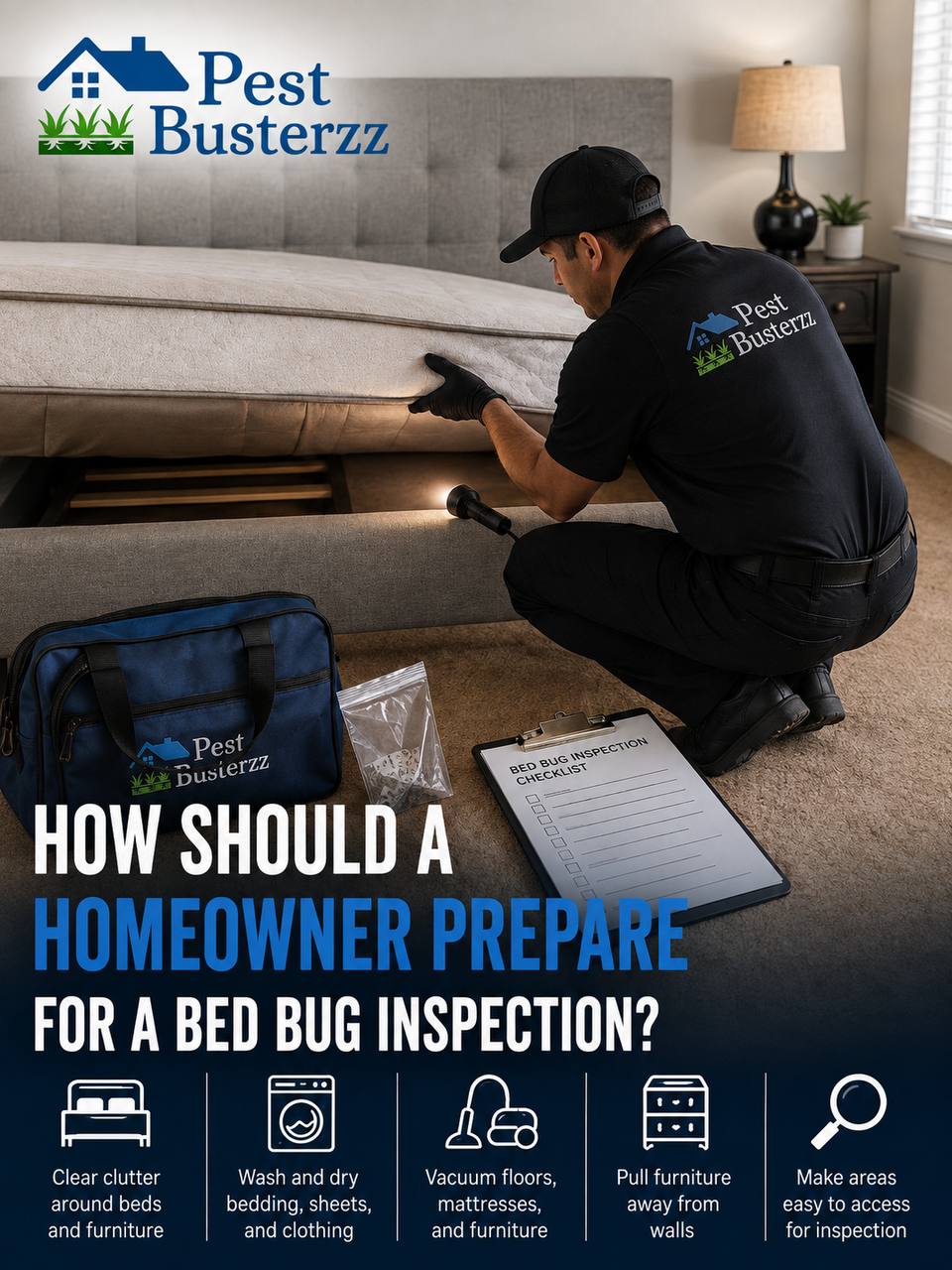
The short version: document, clear access, and leave major changes alone
Think about preparation in three parts:
1. Document what happened. Record the room, timing, visible details, photographs, and recent changes that may matter.
2. Make ordinary inspection areas reachable. Small obstacles can be cleared around beds, nearby furniture, baseboards, and other relevant edges when it is safe to do so.
3. Avoid actions that move or destroy evidence. Do not spread belongings to another room, discard an item solely out of fear, or use a new product immediately before the visit without direction.
The provider may need to adjust the inspection based on the property. A single-family bedroom, a condo with shared walls, and a rental with multiple sleeping areas can raise different access and coordination questions.
Step 1: Build a useful record before the visit
Write down what you observed while the details are fresh. Include:
- the room, furniture, or area where the concern appeared;
- the date and approximate time, including whether it happened more than once;
- what you actually saw, such as an insect, mark, shed material, or change in the room;
- photographs that show both the detail and its surrounding location; and
- recent changes such as travel, guests, a new sleeping location, moved furniture, or an item brought into the room.
Keep the description factual. “I noticed a small insect near the mattress seam on Tuesday” is more useful than treating the observation as a confirmed identification. The CDC explains that bed bugs can hide in mattress seams, box springs, bed frames, headboards, nearby furniture, and cracks or crevices, while a bite pattern alone does not settle what caused it.
Step 2: Make the likely inspection path accessible
Start where people sleep or rest, then work outward only as far as the concern or provider's scope suggests.
Around the bed
When it is safe and practical, keep access to mattress seams, the box spring, the bed frame, and the headboard. Small items on a bedside table or floor can be moved within the same area if that improves access, but do not create a new pile in another room.
Nearby furniture and edges
The inspection may also include bedside tables, dressers, upholstered furniture, baseboards, cracks, closets, and other edges near the reported sleeping area. The goal is not to empty every drawer or dismantle furniture. It is to make the relevant surfaces reachable and tell the provider what could not be accessed.
Areas you should not force open
Do not open walls, take apart furniture, move heavy items, or enter an unsafe or sealed area just to prepare. Make a note of the limitation and ask whether the provider needs a different access plan. A limitation is useful information; hiding it can make the scope less clear.
Step 3: Preserve useful evidence without trying to diagnose it
Keep the original photograph if you take one. A close-up can be difficult to interpret without context, so a second wider photo may show where the detail was found. Avoid editing, scrubbing, covering, or discarding a suspected evidence area before the visit when it is safe to leave it alone.
If you have an insect or other physical item you believe may be relevant, ask the provider how they want it handled. Do not handle an unknown insect unnecessarily. A retained item may be useful, but the decision about identification belongs in the inspection conversation.
The CDC's DPDx guidance describes physical identification and sheltered locations as more useful than relying on a bite reaction alone. That is why the record should preserve what you observed without turning it into a diagnosis.
What not to do before the inspection
A few well-intended actions can make the original situation harder to evaluate. Before the visit:
- do not move bedding, luggage, clothing, furniture, or clutter to another room just to clear the area;
- do not throw away a mattress or upholstered item solely because you are worried it may be involved;
- do not apply a new product immediately before the inspection to test a theory;
- do not scrub, cover, or alter a suspected evidence area when you can safely leave it available; and
- if you already used a product or moved an item, write down what changed and tell the provider.
These are evidence and access precautions. They are not a treatment plan.
Inspection preparation is not treatment preparation
An inspection is an evidence and scope conversation. Treatment preparation can involve separate, provider-specific instructions that depend on the property and the method selected after the inspection.
The EPA's treatment-preparation guidance includes steps that belong to a treatment process, not automatically to an inspection visit. Do not turn a treatment checklist into universal pre-inspection instructions. The supplied featured image is a visual prompt, not a promise that every homeowner should wash, vacuum, discard, isolate, or move items before an inspection.
If treatment is recommended, ask for current written directions for the named service and property. Until then, keep the inspection area understandable and avoid making large changes that could move or remove useful evidence.
How the property can change the conversation
The room itself is not the only variable.
- Single-family home: the provider may need to discuss the bedroom, nearby seating, closets, and other sleeping areas that can be reached safely.
- Condo or attached home: ask whether adjacent rooms, shared walls, or common access areas are relevant to the inspection scope. Who coordinates access can be a separate property question.
- Rental or multi-room property: have a clear list of the rooms involved and the timing of observations. Do not assume that one room's preparation instructions automatically apply to every room.
These examples do not assign legal duties or confirm an infestation. They help the provider understand what must be inspected and what remains unknown.
Questions to ask the provider
Before the inspection begins, ask:
1. Which rooms, sleeping areas, and nearby furniture are included?
2. Should adjacent rooms, shared walls, or other areas be made accessible?
3. What photographs or observations would be useful to review?
4. Should I preserve or bring a specimen, and how should it be handled?
5. What conditions could limit the inspection?
6. How will findings be documented, and what happens after the visit?
7. If treatment is recommended, when will I receive the separate preparation instructions?
Those questions help separate what is known from what still needs to be checked. They also give the provider a chance to explain the scope before you change the property.
Bed bug inspection questions homeowners often ask
Are bites enough to confirm bed bugs?
No. Bite reactions vary and can look like reactions from other causes. Physical evidence and an appropriate inspection are more useful than a bite pattern alone.
Should I move the bed or furniture before the inspection?
Keep ordinary areas accessible without moving heavy furniture or spreading belongings to another room. Ask the provider before making a larger change.
Should I throw away a mattress or upholstered item?
Do not discard an item solely because you are concerned about it. Ask the provider what should remain available for inspection.
Does preparing for an inspection mean I am ready for treatment?
No. Treatment preparation can be different and should come from the provider for the specific service and property. This guide is limited to making an inspection more useful.
Ask about the appropriate inspection conversation
If you are concerned about possible bed bug activity, contact Pest Busterzz to discuss the property and ask about an appropriate inspection. You can also review the company's bed bug service page and South Florida service areas.