
Why Should You Get Termite Pest Control Before You See Damage in South Florida?
You should get termite pest control before visible damage appears because termites can remain hidden inside wood, walls, and soil while actively feeding on a structure. By the time homeowners notice damaged wood, termite pellets, mud tubes, or swarmers, an established colony may have already been active for months or years. Preventive inspections and treatment can identify termite activity earlier and help limit costly structural damage.
South Florida properties face year-round pressure from termites thanks to the region’s warm, humid climate and variety of established termite species. Pest Busterzz helps homeowners protect their properties by focusing on early detection, prevention, and termite control strategies appropriate for the type of termite involved. Rather than waiting for obvious damage to appear, a proactive approach can uncover subtle warning signs and vulnerable areas before the problem becomes more extensive. This is particularly important in South Florida, where invasive subterranean termites and drywood termites can remain concealed while colonies grow. Whether you own an older home or a newer property, regular termite inspections can provide valuable insight into what may be happening behind walls, beneath flooring, or around the foundation.
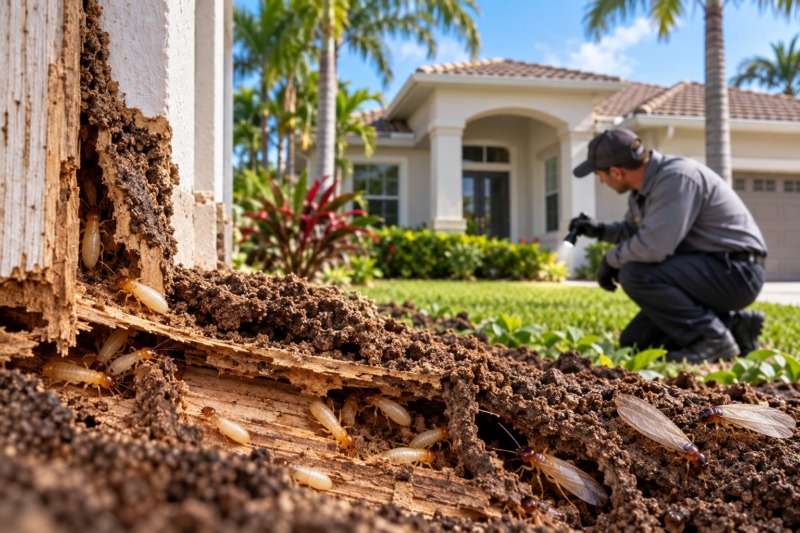
Preventive Termite Treatment and Inspections in South Florida
Termite prevention is more effective when it begins before homeowners discover obvious structural damage. According to the U.S. Environmental Protection Agency (EPA), termites cause billions of dollars in structural damage each year, while property owners spend more than $2 billion annually treating them.
South Florida deserves particular attention. UF/IFAS reports that Florida has 20 established termite species, although not all are structural pests. The invasive Asian subterranean termite is currently restricted to southern Florida, while Formosan subterranean termites occur primarily in coastal Florida cities and other parts of the state.
Why Can Termites Cause Damage Before You Notice Them?
Termites are difficult to detect because much of their activity takes place inside wood, underground, or behind finished surfaces. A property can look perfectly normal from the outside while termites are feeding in concealed areas.
UF/IFAS notes that with some drywood termite species, it may take years before damage is detected. Subterranean termites can be similarly secretive, sometimes hollowing wood while leaving only a thin exterior layer intact.
Waiting for damaged wood to become obvious therefore gives termites the advantage. Warning signs that may eventually appear include:
- Small piles of drywood termite pellets, sometimes mistaken for sawdust
- Tiny kick-out holes in wood
- Mud tubes along foundations, walls, or other surfaces
- Discarded termite wings
- Winged termites, also called swarmers or alates
- Blistering, peeling, or unusually soft wood
- Hollow-sounding wood
These signs deserve prompt professional attention, but their absence does not guarantee that a property is termite-free.
Does Seeing Termite Swarmers Mean You Already Have a Problem?
Termite swarmers indicate that a mature termite colony is nearby, although they do not always prove that the colony is inside your home. If swarmers are emerging from the structure itself, however, professional inspection should be a priority.
UF/IFAS explains that established termite colonies remain active throughout the year, while mature colonies periodically produce winged termites that leave to establish new colonies. Researchers compare these swarms to smoke indicating that there is a fire somewhere nearby.
For certain drywood termites, waiting for a swarm can mean waiting years. UF/IFAS reports that the West Indian drywood termite does not produce alates until a colony reaches maturity at approximately five years old.
That is why swarmers should be viewed as a warning signal, not the ideal time to begin thinking about termite prevention.
Why Is South Florida at High Risk for Termite Activity?
South Florida supports several important termite pests, including native and invasive species capable of damaging structures. Warm conditions, abundant moisture, dense development, mature landscaping, and the movement of infested wood can all contribute to termite pressure.
The risk continues to evolve. In 2025, University of Florida researchers confirmed that hybrid colonies resulting from Formosan and Asian subterranean termites had become established in South Florida. These two invasive species are considered highly destructive structural pests.
UF/IFAS also reports that Asian subterranean termites are currently restricted to southern Florida, making termite awareness particularly relevant for homeowners throughout areas such as Miami-Dade, Broward, and Palm Beach counties.
Moisture can create additional vulnerabilities. Leaking plumbing, air conditioning condensate, excessive moisture around a building, and wood-to-soil contact can make conditions more favorable for certain termites.
How Often Should a South Florida Home Be Checked for Termites?
An annual professional termite inspection is a practical preventive measure, even when you have not noticed obvious termite activity. UF/IFAS specifically includes annual inspections by pest-management professionals trained in identifying and controlling termites and other wood-destroying organisms among its termite prevention recommendations.
Between professional inspections, homeowners can reduce risk by:
- Repairing plumbing, roof, and exterior water leaks.
- Avoiding unnecessary wood-to-soil contact around the structure.
- Keeping accessible foundation areas visible for inspection.
- Monitoring windowsills and floors for discarded wings or termite pellets.
- Watching for mud tubes around the foundation and other potential entry points.
- Having suspicious activity professionally identified rather than assuming it is ants or another insect.
A termite inspection is particularly worthwhile before purchasing a property, after discovering unexplained wood damage, or when swarmers appear around or inside the home.
What Happens If a Termite Inspection Finds Activity?
The appropriate termite treatment depends on the termite species, location, and extent of the infestation. There is no single treatment that is right for every termite problem.
Drywood termites live inside the wood they infest, while subterranean termites generally maintain colonies in the ground and travel to food sources. UF/IFAS identifies non-repellent liquid termiticides and chitin-synthesis inhibitor bait systems as two primary approaches for managing subterranean termites in the United States.
Professional identification matters because a treatment designed for one termite group may not address another. A termite pest control professional can inspect the property, identify evidence of activity, determine likely termite type, and recommend an appropriate control strategy.
Frequently Asked Questions About Termite Pest Control
Can you have termites without seeing any signs?
Yes. Termites frequently remain concealed underground or inside wood, and UF/IFAS notes that some drywood termite infestations may take years to become noticeable.
What is the most obvious sign of termites?
Common signs include swarmers, discarded wings, drywood termite pellets, damaged wood, and subterranean termite mud tubes. The exact signs depend on the termite species involved.
Should I treat for termites if I do not see any?
Preventive termite protection may be appropriate even without visible activity, especially in termite-prone regions such as South Florida. A professional inspection can help determine the property’s risk factors and whether preventive treatment is recommended.
Are termites active year-round in South Florida?
Established termite colonies can remain active throughout the year, even though noticeable swarming occurs during particular seasons. UF/IFAS notes that workers in established colonies continue feeding and foraging throughout the year.
Protect Your South Florida Property Before Termites Leave Their Mark
With termites, visible damage should never be your reminder to take action. Early inspections and proactive termite pest control can help uncover activity sooner, address conditions that make a property vulnerable, and protect the wood and structural components that termites target.
Ready to protect your home with professional termite pest control in South Florida? Contact Pest Busterzz today to schedule an inspection and take a proactive approach before hidden termite activity becomes visible damage.