
Is Long-Term Pest Control Better Than One-Time Extermination in South Florida?
Long-term pest control is generally better than one-time extermination in South Florida because it addresses existing infestations while helping prevent pests from returning. While extermination can eliminate active pests, ongoing pest management combines targeted treatments, inspections, prevention, and monitoring to provide more consistent protection against Florida’s year-round pest pressures.
At Pest Busterzz, we understand that discovering unwanted pests in your home or business is frustrating. Whether you’re dealing with cockroaches in the kitchen, ants invading your pantry, or rodents in the attic, you want a solution that works, not another temporary fix.
South Florida’s warm temperatures, high humidity, and seasonal rainfall create favorable conditions for many common household pests. That’s why Pest Busterzz focuses on helping customers understand their pest problems and choose effective solutions that address both immediate concerns and future risks.
Our approach emphasizes professional pest management, customer care, and practical prevention strategies tailored to South Florida properties. Instead of simply reacting whenever pests appear, we believe homeowners deserve a proactive strategy that helps keep their properties protected throughout the year.
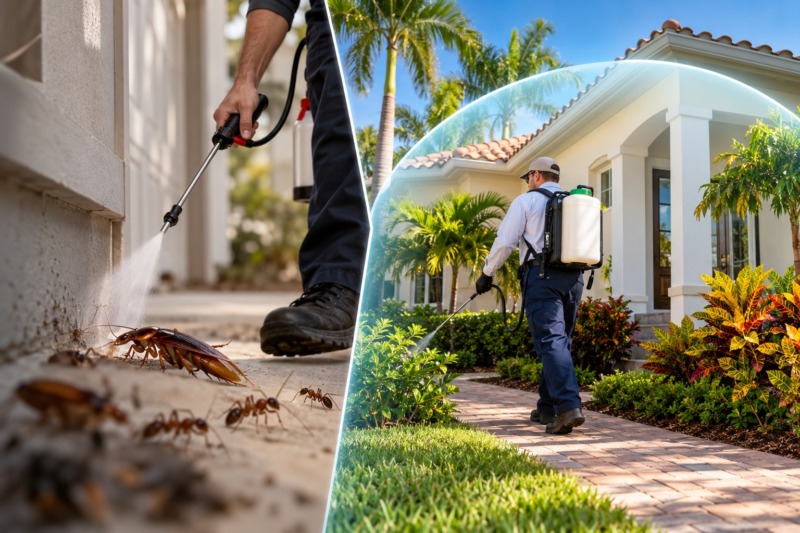
Pest Control vs. Extermination: Understanding the Benefits of Long-Term Pest Management
Although people often use the terms “pest control” and “extermination” interchangeably, they can describe different approaches to managing infestations.
Extermination typically emphasizes eliminating pests that are already present. Pest control, particularly when based on integrated pest management principles, takes a broader approach by combining treatment with prevention, monitoring, and environmental improvements.
The Environmental Protection Agency (EPA) recommends Integrated Pest Management (IPM), which uses pest identification, monitoring, prevention, and targeted control methods to manage infestations effectively while minimizing unnecessary pesticide exposure.
The key difference is simple: Extermination addresses the immediate infestation, while comprehensive pest control also addresses the conditions that allow pests to return.
1. What Is the Difference Between Pest Control and Extermination?
The primary difference is the scope of the service.
A one-time extermination treatment may reduce or eliminate an existing pest population. However, if the conditions attracting pests remain unchanged, another infestation can develop.
A comprehensive pest control program considers several factors:
- Inspection: Identifying pests, entry points, and areas of activity.
- Targeted treatment: Selecting appropriate methods for the specific infestation.
- Prevention: Addressing moisture, food sources, shelter, and access points.
- Monitoring: Checking whether treatments are working.
- Ongoing maintenance: Adjusting prevention strategies as conditions change.
For example, treating cockroaches in a kitchen may reduce their numbers. However, repairing plumbing leaks, sealing gaps, and improving sanitation can help prevent future activity.
Importantly, extermination and pest control are not mutually exclusive. A professional exterminator may also provide comprehensive prevention services. Homeowners should evaluate the actual treatment plan rather than relying on the company’s job title.
2. Why Do South Florida Homes Need Ongoing Pest Protection?
South Florida’s subtropical climate allows many pests to remain active throughout the year, making preventive pest management particularly valuable.
Unlike regions with prolonged freezing winters, South Florida experiences relatively mild winter temperatures. Combined with humidity and seasonal rainfall, these conditions can support persistent pest activity.
Common pest concerns include:
- Cockroaches: Thrive in warm, humid environments and frequently seek food and moisture indoors.
- Ants: Enter buildings through small openings while searching for food and water.
- Rodents: Find shelter in attics, garages, and wall cavities.
- Mosquitoes: Reproduce in standing water, especially during rainy periods.
- Termites: Can cause significant structural damage when infestations remain undetected.
The University of Florida’s Institute of Food and Agricultural Sciences (UF/IFAS) recommends regular pest scouting and integrated pest management practices for South Florida landscapes.
Homeowners in Miami-Dade, Broward, and Palm Beach counties should pay particular attention to moisture accumulation, damaged window screens, vegetation near structures, and openings around plumbing.
These conditions can provide pests with opportunities to enter and establish themselves.
Local tip: After heavy rainfall, inspect patios, gutters, and outdoor containers for standing water. Removing these water sources can help reduce mosquito breeding opportunities.
3. Is Long-Term Pest Control More Cost-Effective Than One-Time Extermination?
Long-term pest control can be more cost-effective when recurring infestations would otherwise require repeated treatments or lead to property damage.
A single extermination service may initially cost less than an ongoing maintenance program. However, the lowest upfront price does not necessarily represent the best long-term value.
Consider two situations.
Scenario A: One-Time Extermination
A homeowner notices cockroaches and schedules a treatment. The visible infestation decreases, but moisture problems and entry points remain. Several months later, cockroaches return, requiring another service.
Scenario B: Comprehensive Pest Control
A homeowner receives an inspection, targeted treatment, and recommendations for reducing moisture and sealing entry points. Follow-up monitoring helps identify renewed activity before it becomes a larger problem.
The second approach may reduce the likelihood of repeated infestations and unexpected treatment expenses.
According to the CDC, integrated pest management combines prevention, pest reduction, and the elimination of conditions that contribute to infestations.
However, ongoing service is not automatically necessary for every pest problem. A limited infestation with a clearly identified source may be resolved through a single treatment and appropriate preventive measures.
The best value comes from selecting a service plan that matches your property’s actual pest risks.
4. How Does Professional Pest Control Prevent Infestations From Returning?
Professional pest control helps prevent recurring infestations by identifying why pests are entering a property and reducing the conditions that support them.
Effective long-term pest management involves more than applying pesticides.
The EPA identifies prevention as a fundamental component of integrated pest management, with targeted treatments used when necessary.
A practical prevention strategy includes five important steps:
- Identify the pest. Different species require different control methods.
- Eliminate attractants. Store food securely, remove trash regularly, and repair leaks.
- Reduce entry points. Seal appropriate cracks, repair screens, and address openings around doors and utilities.
- Apply targeted treatments. Use control methods appropriate for the pest and infestation.
- Monitor results. Check for new activity and adjust the strategy when needed.
For South Florida homeowners, routine inspections are especially useful around kitchens, bathrooms, garages, attics, and exterior foundations.
Outdoor maintenance also matters. Keeping vegetation away from exterior walls, removing unnecessary clutter, and maintaining drainage can make properties less attractive to certain pests.
While no pest control program can guarantee that pests will never return, consistent prevention and monitoring can significantly improve long-term results.
5. When Should You Choose Professional Pest Control Instead of a Quick Fix?
Professional pest control is particularly valuable when infestations recur, pests are difficult to identify, or the problem threatens your property’s condition or occupants’ health.
Occasionally seeing a single insect does not always indicate a serious infestation. However, repeated sightings may suggest a larger issue.
Consider requesting a professional inspection when you notice:
- Cockroaches or ants repeatedly returning after treatment.
- Rodent droppings, scratching noises, or gnaw marks.
- Mud tubes, discarded wings, or suspected termite damage.
- Pest activity in multiple rooms.
- Persistent infestations despite cleaning and preventive efforts.
A professional assessment can help determine whether targeted one-time treatment or an ongoing pest management program is appropriate.
For South Florida properties, addressing these warning signs early can help prevent minor problems from becoming more expensive concerns.
Frequently Asked Questions About Pest Control vs. Extermination
Is pest control the same as extermination?
Not exactly. Extermination generally focuses on eliminating existing pests, while comprehensive pest control combines elimination, prevention, inspection, and monitoring. Many professional pest control companies offer both services.
How often should pest control be performed in South Florida?
Service frequency depends on the pest species, infestation severity, property conditions, and treatment method. Some homes benefit from quarterly maintenance, while others require monthly visits, temporary follow-up treatments, or less frequent service.
Can pests come back after professional extermination?
Yes. Pests can return if entry points, moisture sources, food availability, or nesting conditions remain unchanged. Preventive maintenance and targeted follow-up services can reduce the likelihood of reinfestation.
Is preventive pest control worth it in Florida?
Preventive pest control can be worthwhile for South Florida properties experiencing recurring infestations or ongoing pest pressures. Regular inspections and early intervention may reduce pest activity, protect property, and limit the need for repeated emergency treatments.
Choose Long-Term Protection With Pest Busterzz
When comparing pest control vs. extermination, the best solution isn’t necessarily the treatment that eliminates pests the fastest. It’s the approach that addresses your current problem while reducing the chances of another infestation.
South Florida homeowners face unique pest challenges, but they don’t have to face them alone.
At Pest Busterzz, we’re committed to helping you find effective pest control solutions that fit your property’s needs. Whether you’re dealing with an active infestation or looking for preventive protection, we’re here to help you take the next step.
Don’t settle for a temporary fix when your home deserves lasting protection. Contact Pest Busterzz to discuss your pest control needs and discover a smarter approach to protecting your South Florida home or business.