
How to Get Rid of Maggots in a Trash Can After the Thanksgiving Cleanup
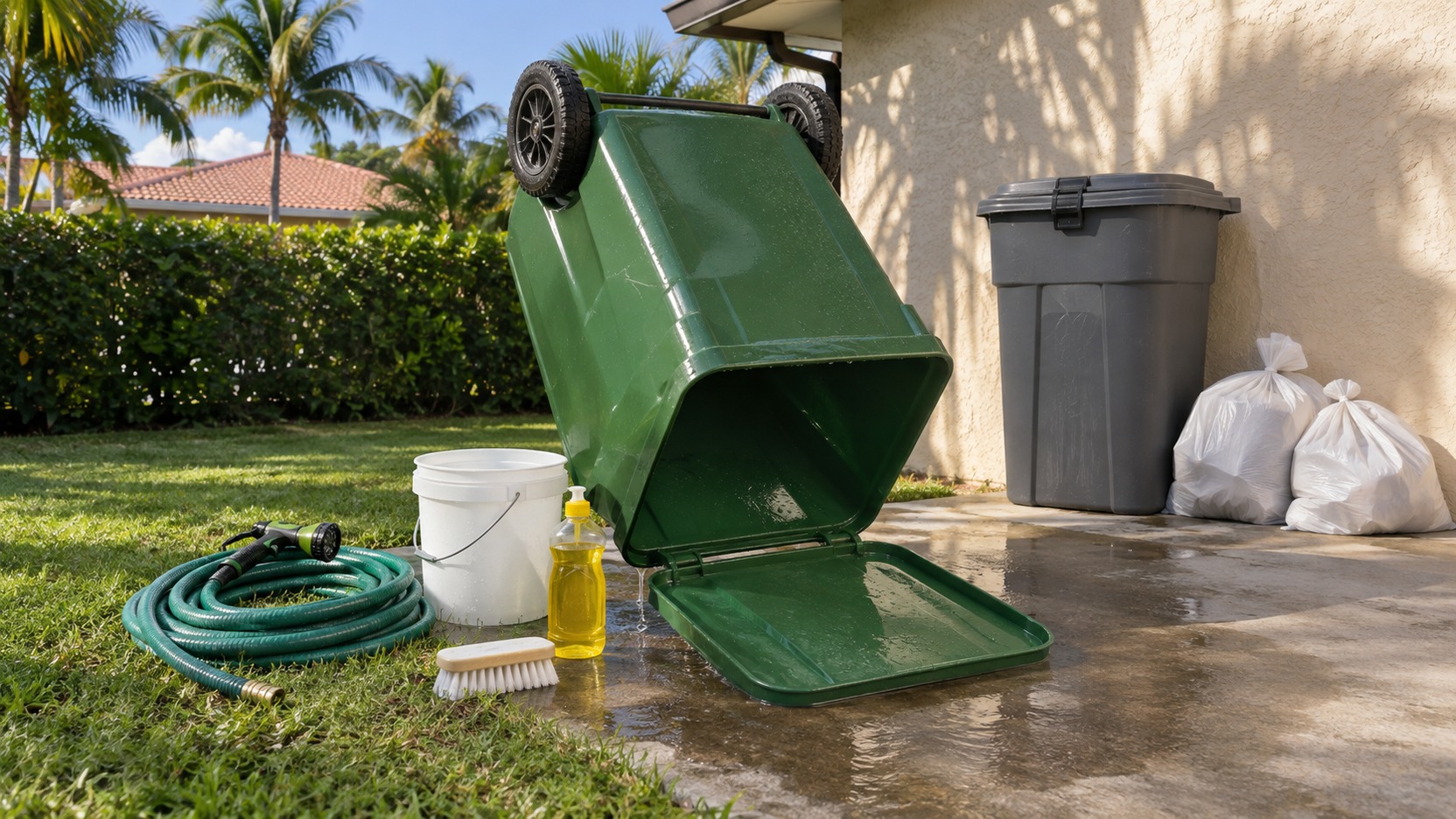
Empty the bin into tied bags, pour hot water over the maggots until they stop moving, scrub the bin with dish soap, and let it dry upside down in the sun. Then bag and tie every wet scrap and latch the lid, because the flies that laid those eggs will come back for the next batch.
That is how to get rid of maggots in a trash can, and the week after Thanksgiving is when it happens in South Florida. Turkey skin, carcass bones and gravy-soaked paper sit in a warm bin, and the next pickup may be days away. Here is the plan, in the order that works.
Before the turkey goes in the oven
Reading this on Wednesday? Three things to do today:
- Set a bag aside for the wet turkey wrapper and the paper towels that catch the drips, and tie it shut the minute the bird is unwrapped.
- Clear a corner of the freezer for the carcass and bones if pickup is days away.
- Check that the bin lid closes and latches, and that the bin is not parked against the house wall.
Why the maggots showed up this week
Maggots are fly larvae. House flies and blow flies lay eggs on warm, moist, rotting food, and a bin full of holiday scraps is exactly that. University of Florida (UF/IFAS) says house fly eggs hatch within about 24 hours, and the maggots feed for 4 to 6 days before they crawl off to a drier spot to turn into pupae. Under Florida conditions a house fly can go from egg to flying adult in 6 to 10 days.
Do the math on Thanksgiving. Scraps tossed Thursday can be crawling by Friday or Saturday, and a new round of flies follows about a week or so later. A female house fly can lay up to 500 eggs in batches of 75 to 150, so one open bag can turn into a crowd.
In much of Florida house flies breed all year, so a cool-looking November day does not stop them. The bin was warm, wet and open, and the flies found it. That is all it takes.
What you are looking at
Not every grub in a bin is the same. A quick ID changes what you do next, and the comparison is below.
- Cream-white, legless, pointed at one end, about 1/3 to 1/2 inch when full grown: usually house fly maggots, per UF.
- Slightly bigger, up to about 3/4 inch: blow fly maggots. They like meat and anything that smells like it.
- Dull whitish and up to about 1 inch, with a small head: black soldier fly larvae. They feed on moist rotting food and take about 14 days to develop.
- Brown, hard, rice-sized or larger capsules on the ground near the bin: the empty skins the maggots turned into when they left to pupate. UF notes they can look like rat droppings or a cockroach egg case.
How to get rid of maggots in a trash can: 8 steps
- Suit up and empty it. Put on gloves. Lift out every bag, tie each one tight and set them in your other bin or at the curb for pickup. Check the bottom for loose scraps, leaked gravy and the lid hinge, where food packs in.
- Pour hot water on the maggots. Published how-to guides say water of at least 140 degrees F kills maggots on contact, and boiling water kills them fast. Pour carefully down the sides and onto the bottom so every maggot gets hit. Keep your face back, keep kids and pets away, and wait until they stop moving.
- Bag the dead ones. Scoop them into a bag with a paper towel or a dustpan, tie it, and put it in the trash that goes out next. Do not rinse them toward the house or a doorway.
- Scrub the whole bin. Use dish soap, hot water and a stiff brush on the bottom, the walls, the rim, the underside of the lid and the hinge. This is the step most people skip, and the smell is what called the flies in. Do not mix soap with other cleaning products.
- Rinse over the lawn or driveway. Hose it out away from the house, the pool and your doors. Look for leftover bits under the lip and in the wheel well.
- Dry it upside down in the sun. Prop the lid open and give it a couple of hours. A wet bin is a welcome mat for flies, and sun and airflow dry it faster than a towel.
- Bag and tie every wet scrap from here on. Meat juice and carcass packaging are the biggest fly magnets. Drain the liquid, double-bag the carcass, and tie each bag before it goes in the bin. If the bin will be full for days, freeze the bones and scraps in a bag and take them out on pickup morning.
- Latch the lid and rinse after every pickup. A lid that does not close tight is an open door. Replace a warped lid, and keep the bin a few feet off the house wall and away from the door. A quick hot-water rinse after each pickup removes the juice that drew the flies in.
Give it a few days. Adult flies already in your yard can lay eggs again as long as there is food waste to find, so the habit change matters more than the one-time rinse.
Post-Thanksgiving bin checklist
- Gloves on, bags tied tight and out of the bin
- Hot water poured on the maggots until they stopped moving
- Dead maggots bagged and tied, not rinsed toward the house
- Bottom, walls, rim, lid underside and hinge scrubbed with dish soap
- Bin rinsed over the lawn or driveway, away from doors and the pool
- Bin dried upside down in the sun with the lid open
- Turkey carcass double-bagged and tied
- Meat juice and packaging liquid drained before bagging
- Bones and scraps frozen in a bag if pickup is days away
- Lid latched, and replaced if it no longer closes tight
- Bin set a few feet off the house wall, away from the door
- Calendar note: rinse the bin after every pickup
Maggots vs black soldier fly larvae vs the empty cases
Short version of what to do with each one.
House fly maggots: cream-white, legless, up to about 1/2 inch. Treat the bin as above and fix the bagging habit. Flies laid the eggs, so cutting off their food is the real fix.
Blow fly maggots: a bit longer, up to about 3/4 inch. They go for meat, so check the carcass bag and anything that leaked. UF says removing garbage and keeping it sealed breaks their life cycle.
Black soldier fly larvae: dull whitish, up to about 1 inch. The adult looks a bit like a wasp but has two wings and no stinger, according to UF. Same fix: clean the bin, bag the food and close the lid.
Empty cases on the ground: brown and hard. The maggots have already left the bin and turned into pupae, sometimes up to 50 feet away. Sweep them up, then clean the bin so the next round has nowhere to start.
What not to do
- Do not put an open bag of scraps or a loose carcass in the bin.
- Do not mix cleaning products. Dish soap and hot water do the job.
- Do not hose maggots toward the house, the doors or the pool.
- Do not spray insecticide into the can. The maggots are in the food waste, and sprays do not fix the bagging habit.
- Do not leave the bin wet and open. Dry it, then close it.
When to call a pest pro
Start with the bin. Call a pro when:
- Maggots keep coming back after you clean the bin and bag the waste.
- Flies are inside the house and you cannot find where they are coming from.
- You find maggots in the garage, under a sink or near a wall or ceiling.
- A shared dumpster or trash enclosure keeps producing flies.
- You are not sure what you are looking at.
A pro can look for the source you cannot reach and walk the property for other breeding spots.
Maggots in a trash can FAQs
Why do maggots show up in my trash can?
Flies lay eggs on warm, moist food waste, and the eggs hatch into maggots within about a day. A bin with holiday scraps, meat juice and an open or loose lid gives them everything they need.
Does boiling water kill maggots?
Yes. Published guides say water of at least 140 degrees F kills maggots, and boiling water does it fast. Pour carefully, keep kids and pets back, and dry the bin afterward so it does not draw more flies.
How long does it take for maggots to turn into flies?
Under Florida conditions, a house fly can go from egg to winged adult in 6 to 10 days. Maggots feed for about 4 to 6 days, then leave the food to turn into pupae.
Are black soldier fly larvae the same as maggots?
They look similar but are bigger, up to about 1 inch, and dull whitish. The adult looks like a wasp but has no stinger. The fix is the same: clean the bin, bag the waste and close the lid.
How do I keep maggots out of my trash can?
Bag and tie every wet scrap, double-bag the carcass, freeze bones if pickup is days away, latch the lid, and rinse the bin after each pickup. Take away the food and the flies have nowhere to lay.
Close the lid on it
Clean the bin, bag the scraps, latch the lid and dry it in the sun. Still seeing maggots after you have done all of that, or finding them indoors? Pest Busterzz serves homes across Miami-Dade, Broward and Palm Beach counties. Schedule your inspection and we will track down the source. For more on keeping the bins and the garbage area in check, read our garbage area guide, our house fly page and our fruit fly guide.